
![Top 7 Virtual Assistant Industry Trends 2026 & Market Stats [Updated]](https://cms-assets.wishup.co/blog/images/2025/09/Virtual-Assistant-Industry-Trends-2025.png)
The #1 VA trend in 2026 is AI-augmented assistants: human VAs using ChatGPT, Claude, and AI automation tools to deliver 3x the output at the same cost.
More than 37% of small businesses outsource at least one task, and more than 52% of businesses plan to do so in 2026. This reminds us that founders today are fighting for time, focus, and speed. That’s where the virtual assistant industry comes in.
In 2026, virtual assistants are not just inbox managers or calendar keepers. They’re specialists, operators, even growth enablers, leveraging AI tools and next-gen skills.
Here are some of the key insights taken from the 2026 virtual assistant industry report. You can also download the full report here.
Need Access to Full 2026 VA Report?
Get all the latest VA insights, trends, and AI predictions to stay ahead.
Virtual Assistant Industry Trends 2026 Every Founder Should Know
1. Global virtual assistant talent, local impact:
Remote work first showed us that you don’t need everyone in the same office to get things done. It opened doors to skilled virtual assistants from every corner of the world. Different time zones, different expertise, but all just a Slack message away.
But here’s what’s changed this year: the hybrid VA model.
Virtual assistants are no longer just “outsourced help.” They’ve become an extension of in-house teams.
They jump into daily standups. They sync across projects in real time. They share dashboards, files, and workflows just like full-time hires sitting in the same building.
AI integration tools, including Notion AI, Slack AI, and ClickUp automations, are what make real-time sync between hybrid VAs and in-house teams operationally seamless in 2026.
Here’s a quick comparison between traditional VAs and the latest hybrid VAs in 2026.
The difference? You still get global flexibility. The kind of talent you’d never find locally at a speed and cost that makes sense for founders.
2. Niche Specialization Over General Support
Niche-specialized VAs — focused exclusively on bookkeeping, eCommerce operations, legal support, or lead generation — are replacing generalist assistants as the preferred hiring model for founders in 2026.
2026 is different. You get both generalist and specialist virtual assistants.
Now you’ll also find VAs who focus purely on bookkeeping, or who live and breathe eCommerce operations, or who have mastered lead generation funnels.
AI integration accelerates niche specialization. For example, a bookkeeping VA using QuickBooks AI, or a lead gen VA using Apollo.io automations, delivers results that a generalist VA cannot replicate manually. Similarly, pairing a VA with a dedicated LinkedIn automation tool can help scale personalized outreach without sacrificing message quality.
Some even bring industry-specific know-how, such as healthcare VAs, real estate VAs, legal VAs, etc.
This shift changes the game for founders. Instead of “training” someone from scratch, you can plug in a VA who already speaks your industry’s language and knows the tools you use. That means less hand-holding, faster results, and more trust in handing off critical tasks.
If you still prefer a jack-of-all-trades VA, you can hire one to cover the everyday admin tasks. That model still works.
But in 2026, more founders are turning to specialist VAs. Specialist VAs combine domain expertise with automation like a lead gen VA running Apollo.io sequences, or an eCommerce VA managing Shopify inventory via automated triggers, delivers output that manual generalists cannot match in speed or volume.
🎯 The Real State of the 2026 Virtual Assistant Market
Inside data on hidden trends, AI impact, and where VA adoption is actually headed
3. Founders Using VAs to Scale Lean
Founders in 2026 are replacing full-time hires with flexible VA support to cut fixed overhead, accelerate onboarding, and scale without long-term payroll commitments.
Startups today are swapping bulky teams for lean, flexible VA support. Remote work adoption normalized distributed team structures, making VA-based lean scaling operationally standard for startups in 2026.
Need bookkeeping handled this month but customer research next month? A VA can cover both without you carrying the long-term costs of a full-time hire.
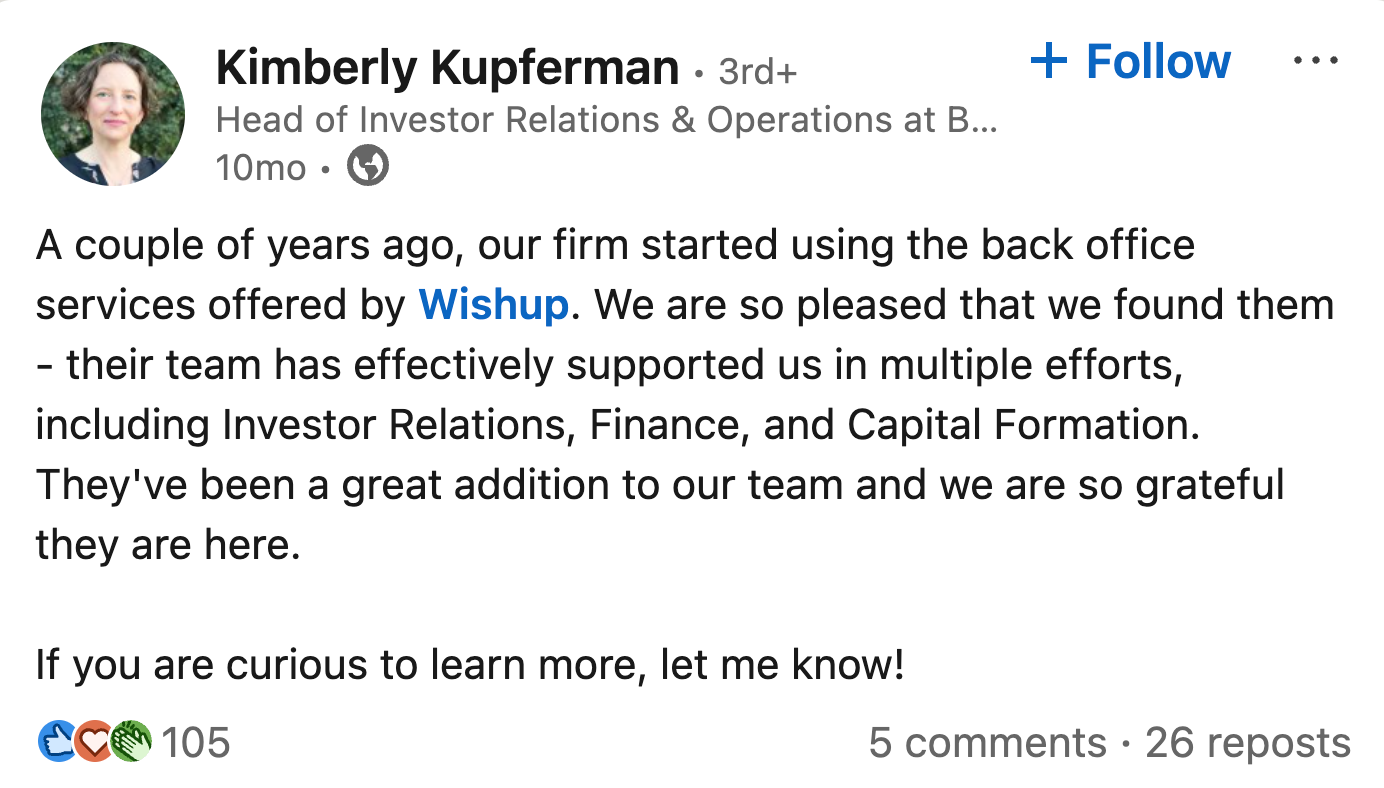
But this isn’t just about saving money (though overheads drop dramatically). It’s more about speed. VAs can be onboarded in days, not months. They can jump into existing systems, adapt quickly, and keep projects moving forward while you focus on growth. And research confirms this productivity boost is real — a study from Airtasker found 65% of remote workers report higher productivity and job satisfaction compared to office-based work — consistent with Wishup client data showing VAs maintain 99%+ task completion rates on daily deliverables. Businesses are also relying on workforce analytics to monitor productivity trends and fine-tune how and where virtual support delivers the greatest ROI.
For busy founders looking to scale their business, that’s gold, right?
- Fewer fixed costs
- Faster execution
- Freedom to pivot without dragging a heavy team behind you.
4. Compliance and Data Security as Priorities
Data security and regulatory compliance, including HIPAA for healthcare, GDPR for EU operations, and standard data privacy protocols, are now non-negotiable requirements when hiring a VA in 2026.
In 2026, hiring a VA is more about trust than skill. Founders want assistants who understand the rules that keep businesses safe. Think HIPAA for healthcare, GDPR for anyone dealing with EU customers, or basic data privacy protocols for everyday operations.
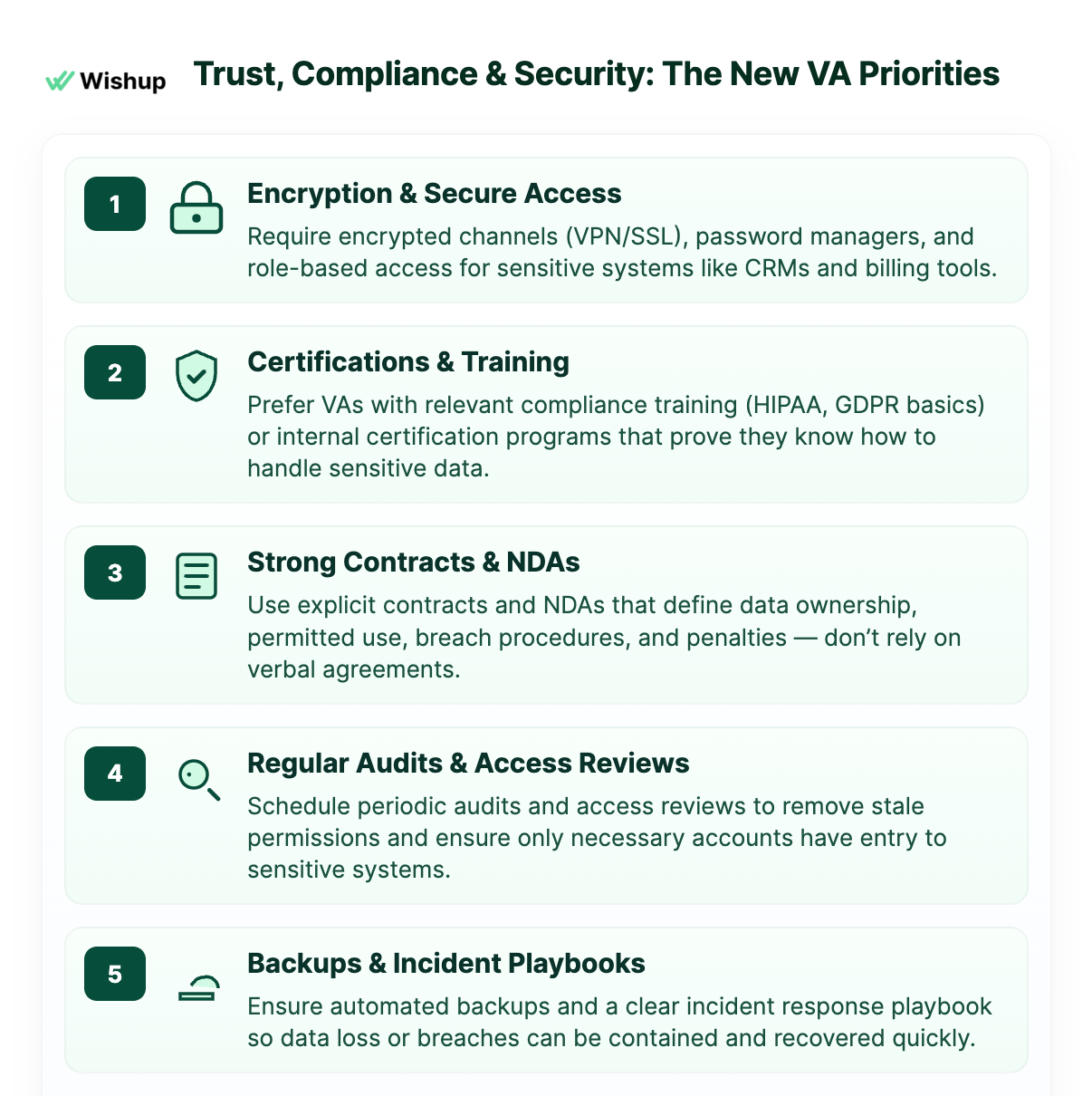
VAs are expected to be guardians of sensitive information. Many are now coming trained, certified, or upskilled in compliance so they protect the business while executing the work.
For founders, that peace of mind is priceless. A VA who can manage your CRM, but also knows how to handle data responsibly, is your asset.
5. Growth of On-Demand VA Marketplaces
Remember when hiring used to take weeks?
Job posts, interviews, back-and-forth emails. It felt endless.
That timeline doesn’t work for today’s busy founders. Startups move too fast. Opportunities don’t wait.
Enter on-demand VA marketplaces (or) agencies. In 2026, you can log in, browse pre-vetted assistants, and get someone on board within hours. Not days. Not weeks. Hours.
In fact, Wishup helps global founders hire virtual assistants in just 60 minutes. Founders who want to skip the search entirely can get a virtual assistant through Wishup and be matched with a pre-vetted, trained assistant the same day.
These platforms are cutting out the noise. You don’t have to perform endless screenings or take the risk with trial-and-error. From pre-vetting to payroll, everything’s being handled by the virtual assistant company.
All you have to do is go to their website, see a VA’s skills, industry focus, and availability right away. Then you plug them into your workflow almost instantly.
For founders under pressure, that speed is a game-changer. Need someone to handle lead gen before tomorrow’s campaign? Or a bookkeeper before tax week? With on-demand VA companies, you can get all of them in minutes.
6. Serious Pre-Vetting
This trend builds right on top of the last one. Speed only works if you can trust the talent. That’s why pre-vetting has gone from a nice-to-have to a non-negotiable in 2026.
In 2026, not just anyone can call themselves a virtual assistant. The bar has risen.
Pre-vetting now goes way beyond a quick interview. Platforms and VA companies are putting candidates through layers of checks before they even get listed:
- Skill assessments to prove they actually know bookkeeping, CRM tools, or lead-gen funnels.
- Scenario tests that simulate real client challenges, so only problem-solvers make the cut.
- Background and reference checks for trust and reliability.
- Communication reviews to ensure they can write, present, and collaborate in a professional way.
- Industry-specific filters like HIPAA knowledge for healthcare VAs or Shopify expertise for eCommerce or dropshipping VAs.
- AI integration proficiency, specifically with ChatGPT, Zapier, and Make, is now a mandatory pre-vetting criterion at elite VA companies, not an optional add-on skill.
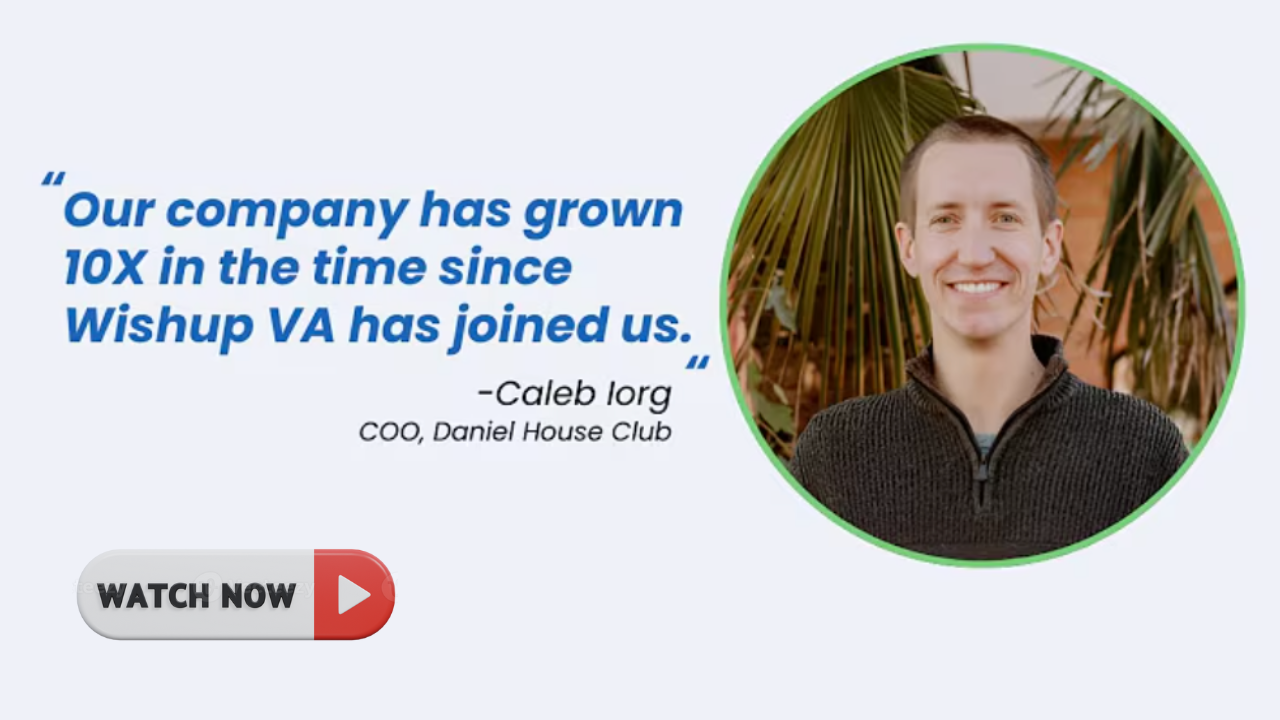
Here’s how VA hiring looked before, versus how serious pre-vetting works in 2026 at elite US-based VA agencies like Wishup.
By the time a VA shows up on your shortlist, they’ve already cleared these hurdles. A busy entrepreneur doesn’t need to do this legwork themselves.
So, in 2026, the term ‘virtual assistant’ has become a career path that demands verified skills, proven reliability, and ongoing training. And that’s exactly why founders are finally trusting VAs with bigger, higher-stakes responsibilities.
7. Shift Towards AI-Powered Virtual Assistants
2026 is the year AI stops being a buzzword and starts being a teammate.
So, virtual assistants have become human + AI hybrids. And the business case for this shift is strong — according to AI adoption statistics for business leaders, 72% of business leaders view AI as a competitive advantage, which is why Wishup VAs trained in 50+ AI tools now represent the most cost-effective way to deploy AI in your daily operations.
Imagine this:
Your VA needs to prep a weekly sales report. In the old world, it might take 2–3 hours of manual data entry and formatting. Now, the VA feeds raw data into an AI tool, gets a polished report in minutes, then adds their insights before sending it to you. What used to take hours now takes 20 minutes, and you get analysis instead of just numbers.
Founders love this because it means more output without adding headcount and expenses.
Tasks that used to bog down your calendar, such as emails, scheduling, and research, can now be done faster and smarter with VAs leveraging AI and automation tools.
The shift also raises the bar for VA skills. A modern VA needs to know how to work with AI, not just do tasks manually. ChatGPT adoption statistics for businesses show that 92% of Fortune 500 companies now use ChatGPT — Wishup VAs trained in ChatGPT and 50+ AI tools act as the human layer that deploys, maintains, and quality-checks AI outputs across your business operations. From Zapier automations to ChatGPT-driven research, the smartest VAs are blending human judgment with AI efficiency. ChatGPT 4 capabilities for business automation now include multimodal features like image reading, voice input, and advanced reasoning — expanding what Wishup automation VAs can deliver using AI-augmented workflows.
Wishup trains its virtual assistants on 70+ AI tools and 50+ no-code tools to help its customers (busy founders) scale faster.
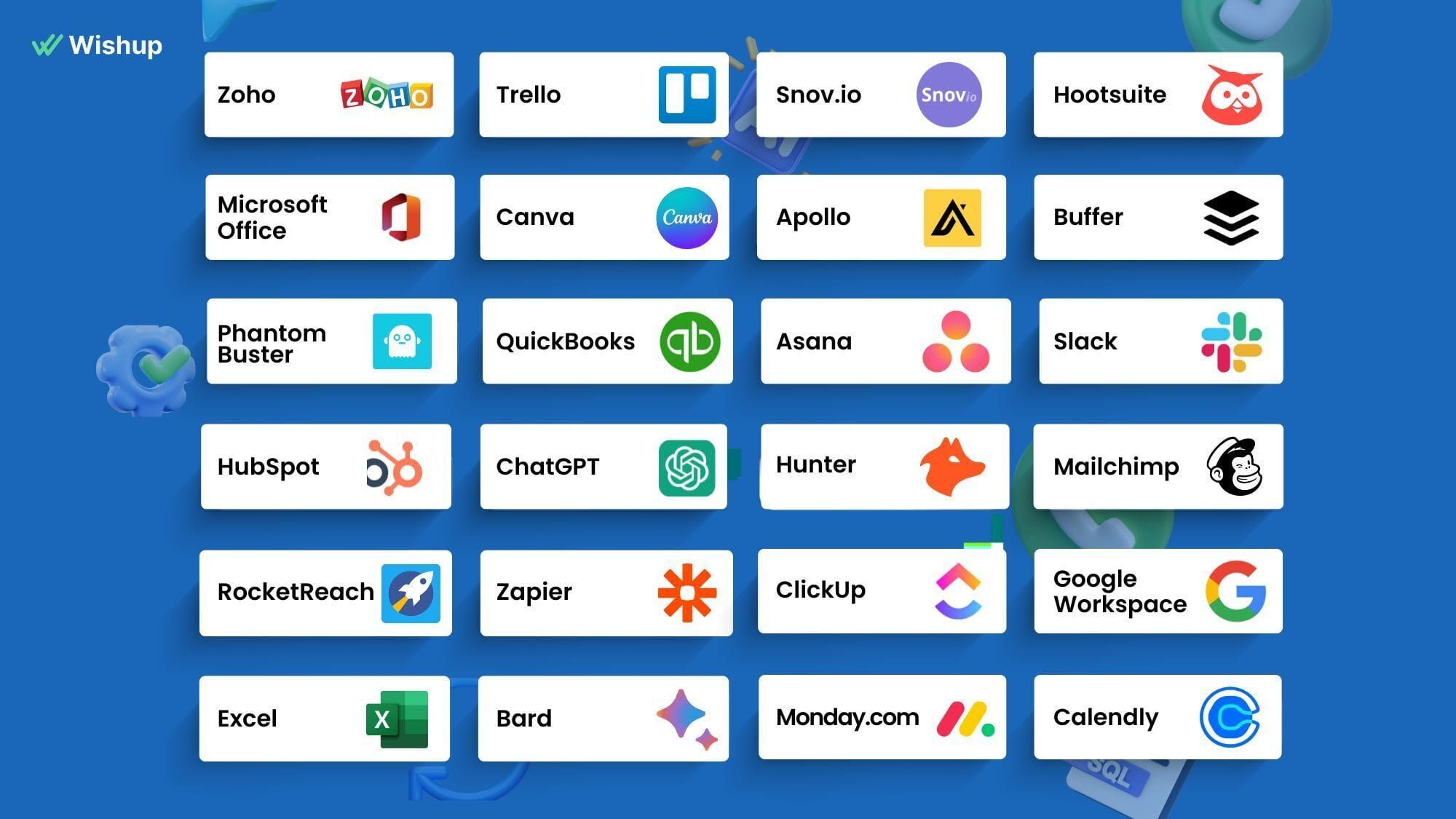
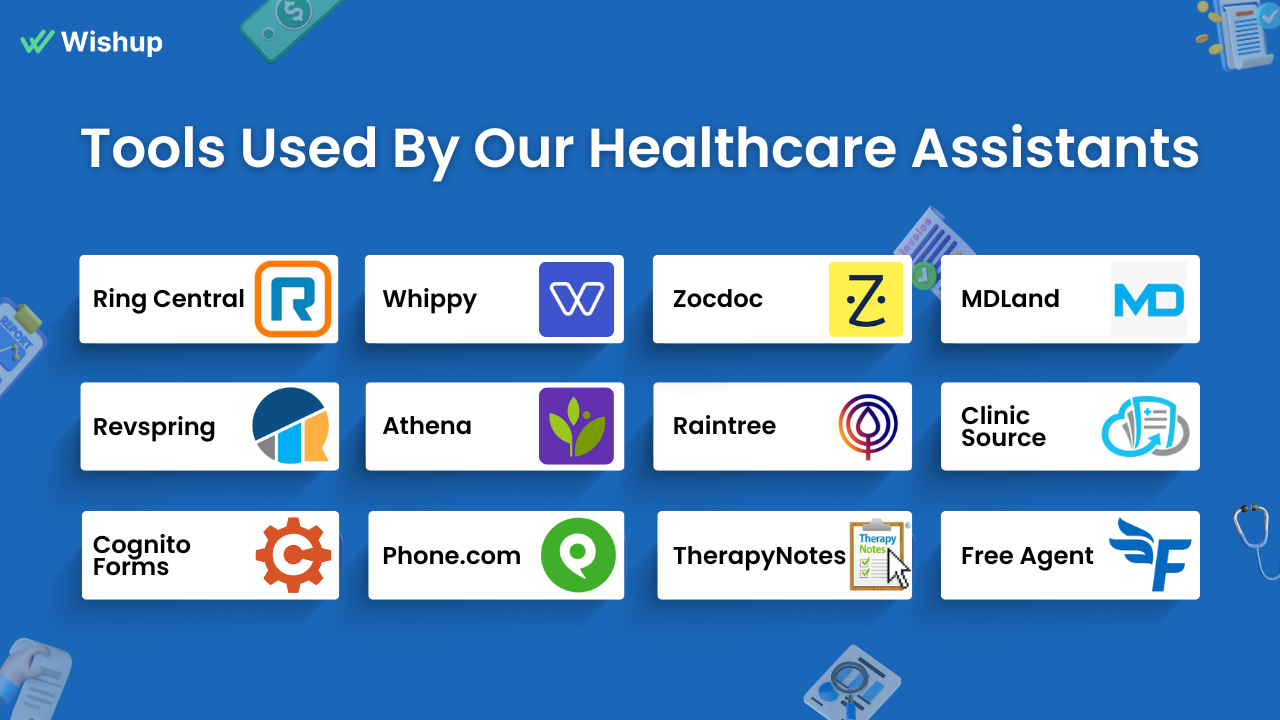
The training extends to industry-specific areas as well. For example, here’s a list of tools a Wishup VA is trained at and knows how to deal with.
Virtual Assistant Industry Statistics Beyond 2026
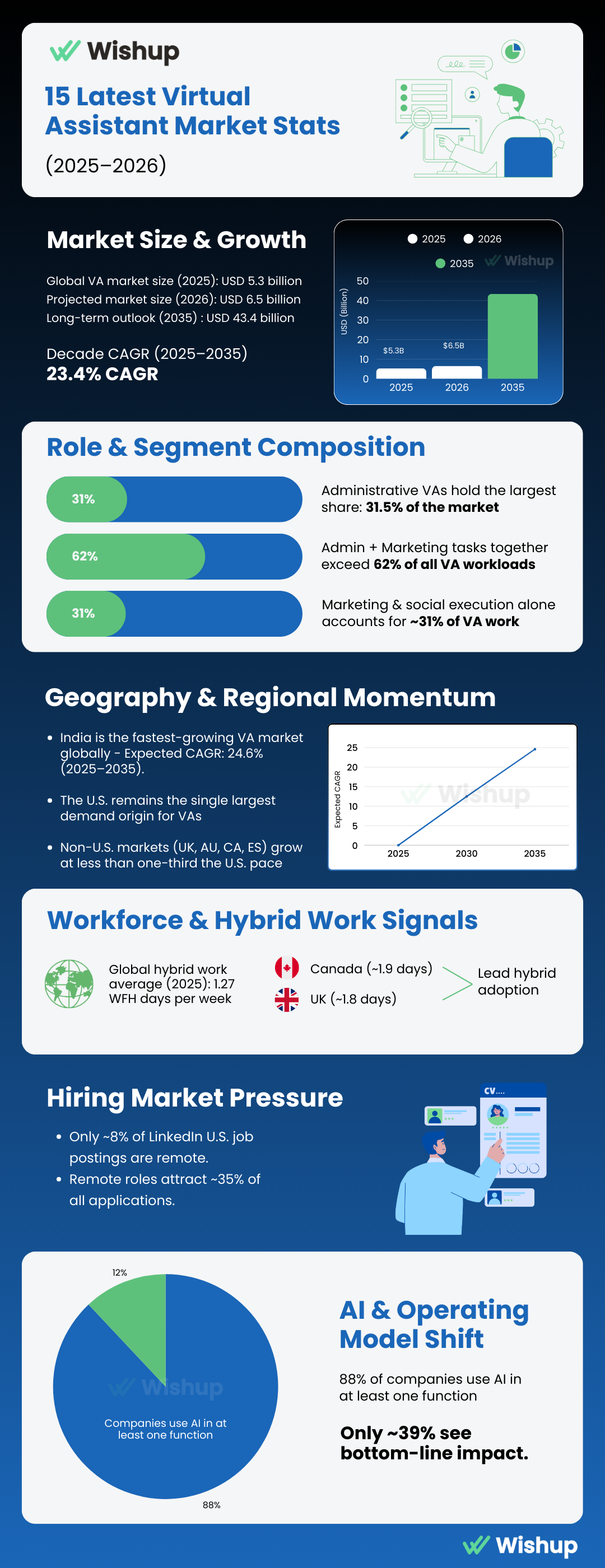
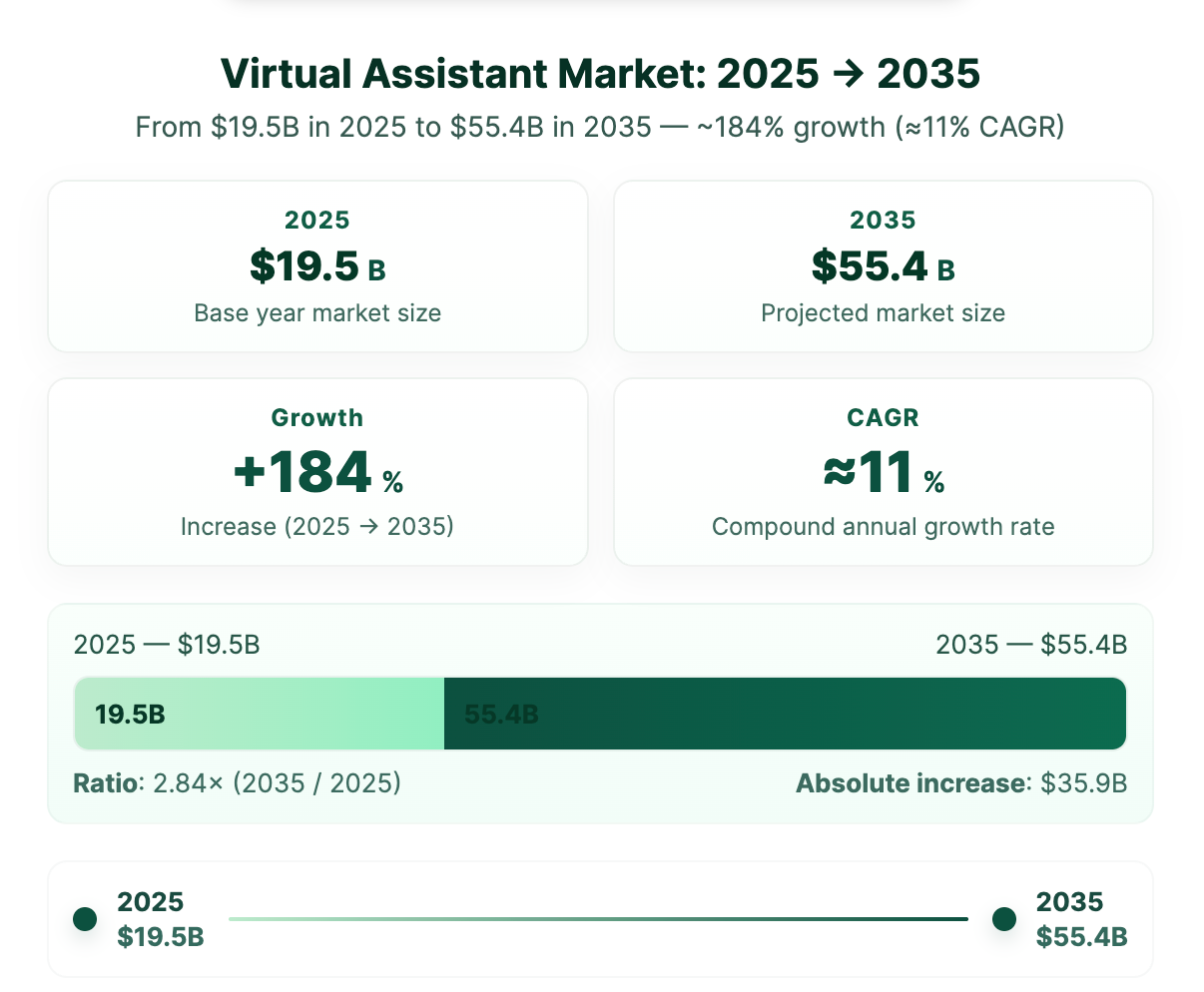
The virtual assistant industry is set for explosive growth. In 2025, the global market was projected to hit $19.5 billion, and by 2035, it could reach $55.4 billion. That’s a jump of 184% over the decade—roughly 2.8× growth, at a CAGR of 11%.
Several trends are driving this surge:
- remote work is now mainstream,
- talented professionals from every corner of the globe are ready to hire
- Businesses (especially startups) are looking for staffing solutions that are fast, flexible, and cost-effective.
Leading Service Models: Dedicated Monthly VAs
- The dedicated monthly VA segment dominates, expected to generate 53.5% of market revenue in 2025. Remote work adoption directly drives dedicated monthly VA demand. Businesses already operating with distributed teams find subscription-based VAs a natural, low-friction addition to existing workflows.
- Why? Businesses want long-term, reliable support with clear SLAs and continuity.
Subscription-based VAs ensure predictable outcomes, making it easier for founders to plan and scale.
Who’s Driving Demand: SMBs
- Small and medium businesses (SMBs) are major players, capturing 44.4% of the market in 2025.
- They love cost-optimized outsourcing and flexible headcounts.
High adoption is supported by easy onboarding, bundled tool stacks, and predictable subscription pricing.
Top VA Roles: Administrative Leads
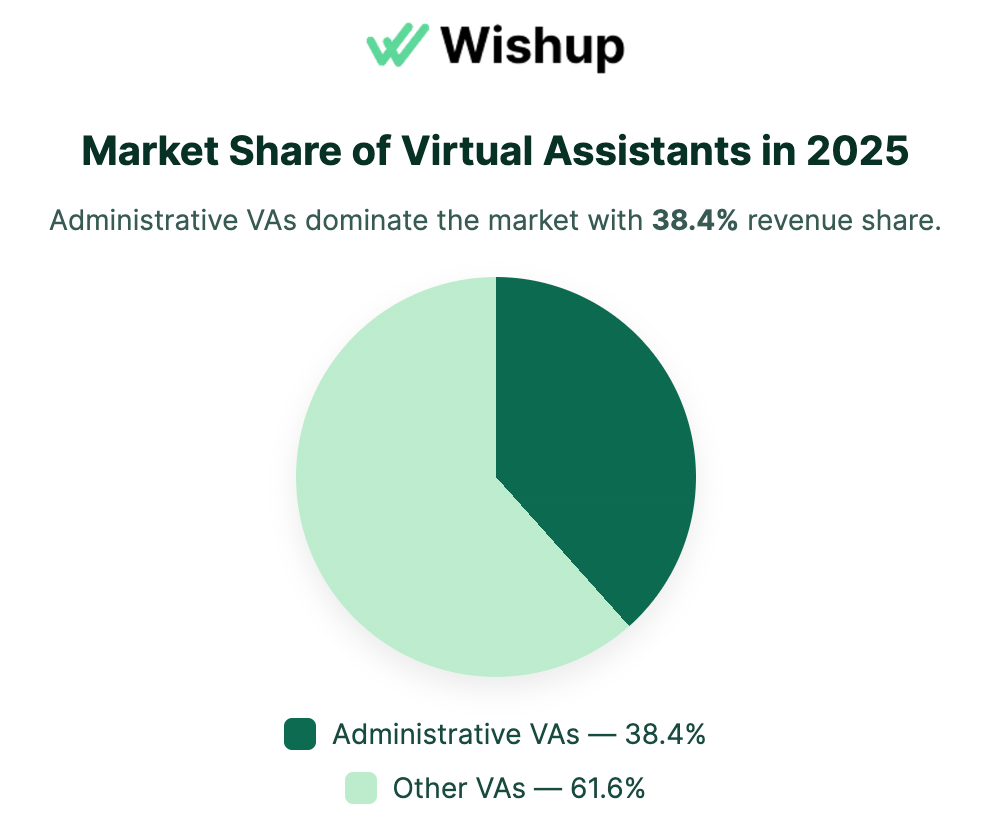
Administrative VAs remain the most in-demand, accounting for 38.4% of market revenue in 2025.
Global Growth by Country
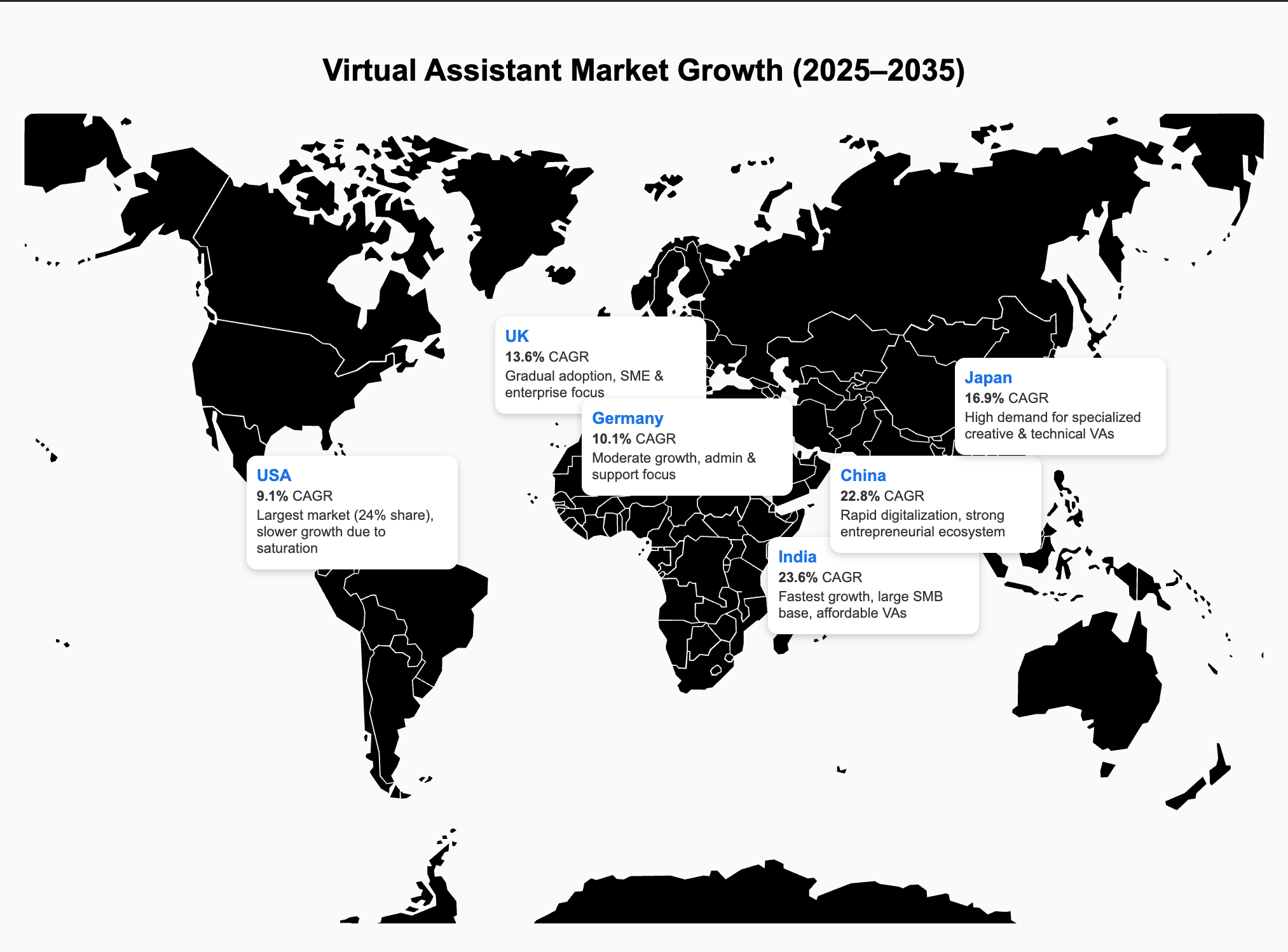
The VA market isn’t growing evenly. Asia is surging ahead, while Western markets grow steadily.
Key insights:
- Asia (India, China, Japan) is leading the next wave of growth.
- Western markets are stable but slower-growing.
- Subscription-based dedicated VAs keep demand resilient globally.
Why This Matters for Founders?
- VAs aren’t just an outsourcing option—they’re core to scaling efficiently.
- Administrative roles remain essential, but specialized and dedicated VAs are taking center stage.
- The global talent pool is expanding fast, especially in Asia, offering affordable, high-quality, and scalable options.
In short: Whether you’re a startup in the US, a small business in the UK, or an entrepreneur in India, virtual assistants are becoming non-negotiable partners for growth in 2026 and beyond.
- Their tasks? Calendars, inboxes, documentation, and coordination—the backbone of outsourcing.
- Admin VAs are perfect for SMBs and startups that need reliable support without hiring full-time staff.
Factors Driving the Expansion of the Virtual Assistant Market in 2026
7 factors are driving the virtual assistant market's growth from $19.5 billion in 2025 to a projected $55.4 billion by 2035: remote work normalization, global talent access, cost-effective staffing, faster onboarding, specialized roles, AI integration, and subscription-based dedicated models.
1. Remote Work Is Here to Stay:
The shift to remote and hybrid work has unlocked access to talent across the globe. Companies no longer need to hire locally; they can tap skilled VAs from anywhere, anytime. Forbes data confirms 12.7% of full-time employees work fully remotely with 28.2% in hybrid models — meaning the vast majority of knowledge work is now deliverable from anywhere, validating the permanent shift to VA-based support models."
2. Globalization of Talent:
Borders don’t limit VAs anymore. Businesses can hire assistants with niche expertise, like bookkeeping, e-commerce, and lead generation, who might be thousands of miles away. Quality talent is everywhere.
3. Cost-Effective Staffing Solutions:
Hiring a full-time employee can be expensive. VAs give businesses the flexibility to pay only for what they need. This is especially attractive for startups and SMBs balancing tight budgets.
4. Faster Onboarding Through Marketplaces:
On-demand VA platforms like Wishup make hiring nearly instantaneous. Pre-vetted assistants, ready to start in hours instead of weeks, reduce downtime and accelerate growth.
5. Rise of Specialized Roles:
Founders now want expertise, not just general admin help. VAs specialize in areas like marketing, operations, HR, and tech support. Specialized skills drive higher impact, making VAs indispensable.
6. AI Integration and Productivity Tools:
AI is supercharging VA capabilities, enabling VAs to leverage automation, AI-driven research, and analytics to deliver faster, smarter results, with tools like n8n vps hosting supporting self-hosted workflow automation that blends human judgment with technology.
7. Subscription and Dedicated Models:
Businesses increasingly prefer subscription-based, dedicated VAs for long-term, predictable support. This ensures role continuity and reliability across functions.
Challenges That Could Shape Growth Trajectories
6 challenges threaten the VA market's growth trajectory in 2026: quality assurance gaps, data security risks, AI overreliance, cultural and communication barriers, market saturation in North America and Europe, and high remote talent turnover.
1. Quality Assurance and Skill Gaps:
Not every VA is created equal. As demand skyrockets, ensuring consistent quality becomes tricky. Training, certification, and pre-vetting processes are helping—but gaps still exist.
2. Data Security and Compliance:
With VAs handling sensitive business and customer data, privacy risks are real. HIPAA, GDPR, and other compliance requirements make security a top priority. Businesses must hire trained, trustworthy VAs.
3. Overreliance on Technology:
AI and automation are boosting VA productivity, but too much dependence can backfire. Founders still need human judgment for strategic decisions, client communication, and nuanced problem-solving.
4. Cultural and Communication Barriers:
Remote work adoption at scale has amplified communication friction — time zone gaps of 8–12 hours between US founders and Asian VAs require structured async protocols to maintain productivity. Clear communication protocols and structured workflows are essential.
5. Market Saturation in Mature Regions:
North America and Europe have strong VA adoption, but growth is slowing due to competition and saturation. The market is moving toward Asia and other emerging regions for rapid expansion.
6. Retention and Consistency:
High turnover in remote roles can disrupt workflows. Subscription-based or dedicated VAs help, but founders still face challenges keeping top talent engaged and aligned.
While the VA market offers incredible opportunities, businesses that navigate these challenges strategically will emerge ahead. Awareness and proactive management are key to sustainable growth.
What These Trends Mean for Founders and Startups?
The 5 direct advantages of 2026 VA trends for founders are: faster scaling through pre-vetted marketplaces, leaner teams with lower fixed costs, access to global specialized talent, built-in compliance and risk management, and competitive productivity gains through AI-augmented workflows.
1. Faster, Smarter Scaling:
With pre-vetted, specialized VAs and on-demand marketplaces, founders can get help within hours, not weeks. Forbes reports 29% of small businesses have implemented AI tools — Wishup VAs with AI training help the remaining 71% deploy AI without the learning curve, using tools like ChatGPT, Zapier, and n8n to automate workflows from day one. That means projects move faster, mistakes are fewer, and growth happens on your timeline.
2. Lean Teams, Big Impact:
You don’t need a huge payroll to achieve big results. Flexible VA support lets startups stay lean while still covering all critical functions, from admin to marketing to operations. McKinsey defines generative AI as systems that create new content — text, images, and code — from natural language prompts, and Wishup VAs use these tools daily to produce first drafts, reports, and summaries that clients review and approve, keeping every function moving without adding to your payroll.
3. Access to Global Expertise:
Hiring a VA today isn’t limited by geography. You can tap specialized talent anywhere in the world, giving your startup skills and insights you couldn’t afford locally.
4. Risk Management Built-In:
Trained, certified, and AI-augmented VAs reduce mistakes and increase reliability. Compliance, security, and quality control are now baked into the process, letting founders focus on strategy, not micromanagement.
5. Competitive Advantage Through Technology:
AI-powered assistants and automation tools mean your VA can handle more, faster. Startups that adopt these hybrid approaches get a productivity edge over competitors still stuck with manual processes.
Closing Thoughts
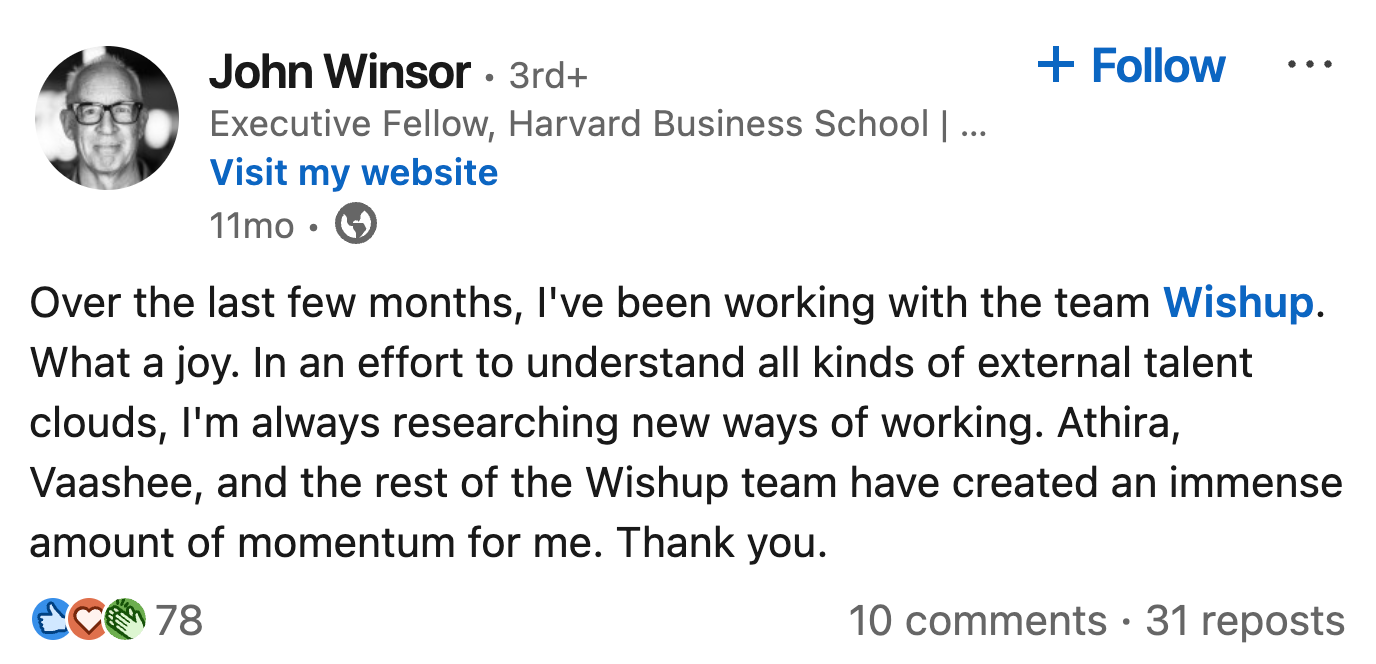
Founders who hire AI-augmented, pre-vetted VAs in 2026 gain a measurable productivity advantage — tasks completed 3x faster, overhead reduced by 40–60%, and onboarding completed in 60 minutes or less. And the benefits go beyond business — full-time remote workers reduce their carbon emissions by 54% compared to in-office workers, according to research in PNAS - making distributed VA teams a business AND environmental advantage.
For founders and startups, the message is clear: lean teams with the right support can move faster, cut costs, and scale smarter. The talent is global, the tools are ready, and the opportunities are endless.
The key is knowing how to choose the right VAs, leverage technology, and build workflows that maximize impact. Do this well, and your VA isn’t just an assistant; they’re a secret weapon for growth.
In a world that moves at startup speed, the right virtual assistant might just be the difference between keeping up and getting ahead.
If you'd like to hire a pre-vetted virtual assistant in 60 minutes, schedule a FREE consultation with Wishup.
🚀 Meet Wishup in 30 Seconds
- ✅ 10+ years in the industry
- ✅ 1,500+ founders served across 50+ industries
- ✅ 200+ skill areas, 70+ no-code tools, 50+ AI tools
- ✅ Clients from Harvard and Y Combinator-backed startups
- ✅ Onboards trained VAs in just 60 minutes
- ✅ 98.8% client satisfaction | 99% on-time delivery
- ✅ Top 0.1% talent only – pre-vetted & ready to start
- ✅ 6-step vetting process (aptitude, cognitive, English, and more)
- ✅ Flexible plans starting at $9.99/hr — no long-term contracts
- ✅ 7-day money-back guarantee
- ✅ Lifetime satisfaction guarantee

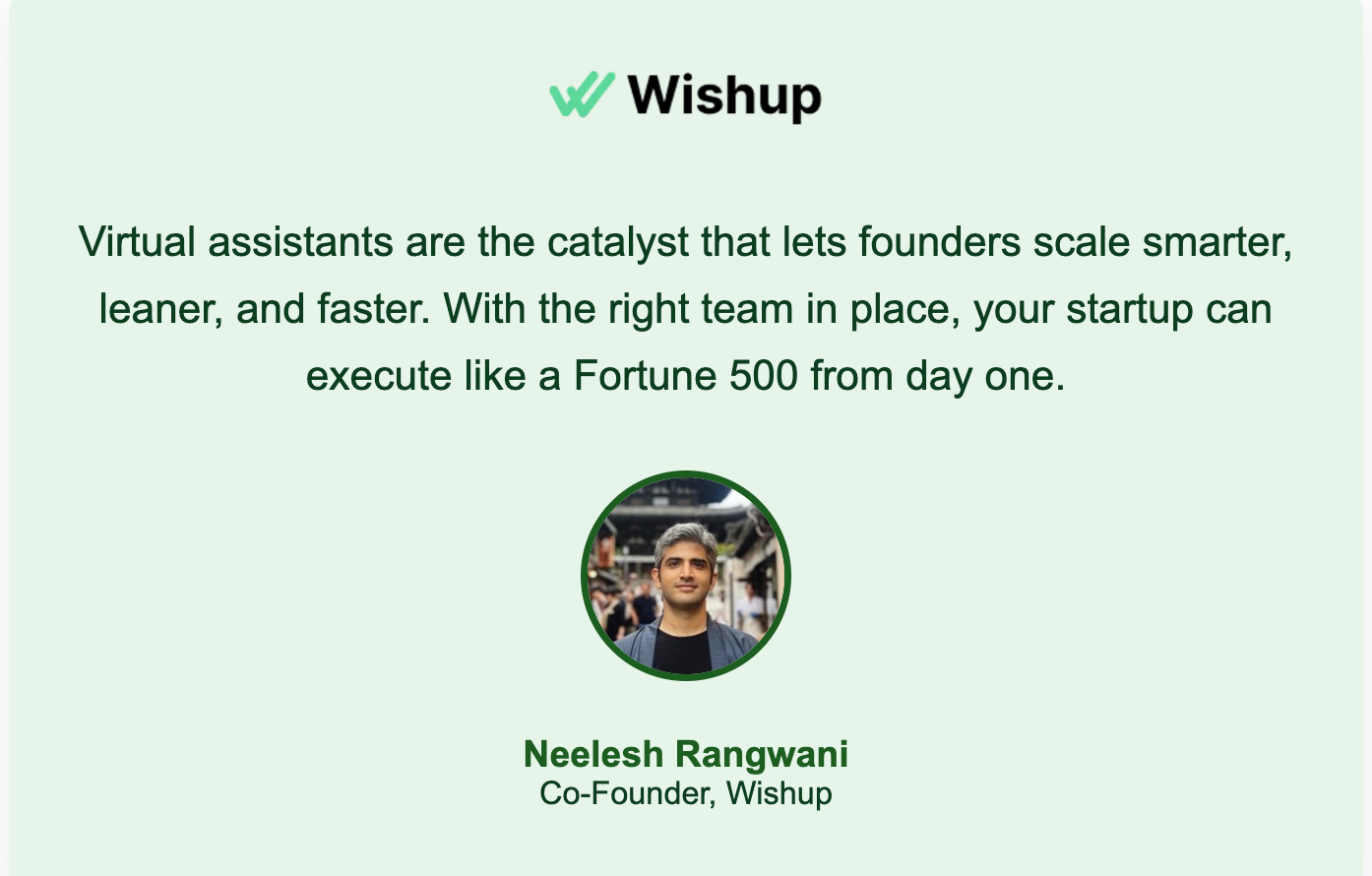
Neelesh Rangwani · Co-founder at Wishup
With 10+ years in the virtual assistant space, Neelesh has helped 1000+ US and global founders build efficient remote teams by matching them with top 0.1% virtual assistant talent. He writes about virtual assistants, hiring frameworks, remote productivity, and scaling ops.
More posts by Neelesh → · Connect on LinkedIn